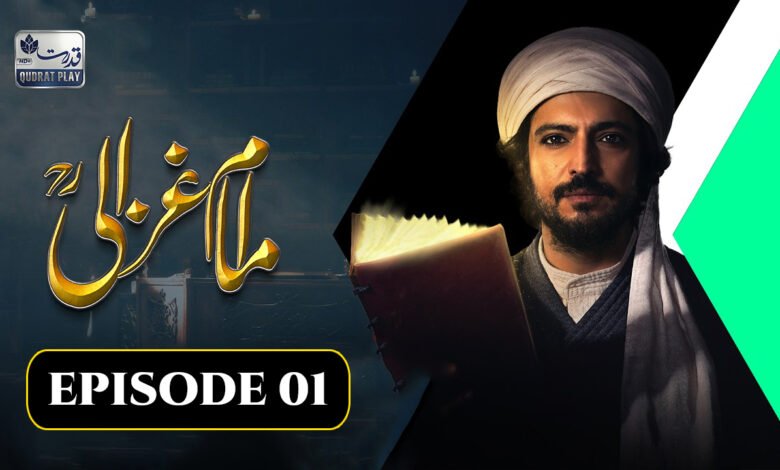
Watch Now Imam Ghazali Season 01 Episode 01 With Urdu Subtitles:
Imam Ghazali (1058–1111 AD) is one of the most influential figures in Islamic history, known as Hujjat al-Islam (The Proof of Islam). He was a polymath who excelled in jurisprudence (fiqh), philosophy, theology (kalam), and mysticism (sufism).
Al-Ghazali Episode 01 With Urdu Subtitles
Part 1: Duty, Brotherhood, and the Search for Healing
The first part sets up both a deeply personal family drama and a broader religious context. On one side, we follow the brothers Ahmet and Gazali (Al-Ghazali) as they journey through rough terrain to find medicinal herbs for their gravely ill father. They grapple with the tension between pursuing their own dreams (like attending a prestigious theological debate) and fulfilling their dutiful obligations to their family. Running parallel to this is the bitter resentment of their adopted brother, Salih, who feels alienated and overshadowed by Gazali’s intellectual reputation and perceived arrogance. Meanwhile, in the broader world, prominent scholars like Nizam al-Mulk and Imam al-Haramayn discuss the fractured state of the Islamic world, hoping that an upcoming debate in Nishapur will reveal wise young scholars capable of uniting the Ummah.
Part 2: The Crisis of Knowledge and the Awaited Renewer
The second part delves heavily into Al-Ghazali’s profound existential and spiritual crisis. Despite being a revered scholar, Gazali realizes that endless theological debates, complex vocabulary, and intellectual
pride have actually distanced him from genuine spiritual truth. In a powerful, dream-like sequence, he abandons his reliance on books and “words,” acknowledging that true understanding requires personal spiritual experience rather than just academic study. At the same time, we are introduced to Seyit Hatun, a devout woman waiting at the gates of Nishapur. Guided by her late father’s visions, she is waiting for the arrival of a “Mujaddid” (a prophesied renewer of the faith) who will heal the hearts of the believers.
Part 3: The Fire of Truth and Spiritual Purification
The third part shifts into a highly mystical and intense spiritual atmosphere, centering around a communal Zikr (a Sufi gathering of remembrance). The rhythmic chanting of “La ilahe illallah” (There is no god but Allah) and “Hasbi rabbi cellallah” (My Lord is sufficient for me) creates a hypnotic focus on shedding worldly concerns and ego. This spiritual trance is suddenly disrupted by a real or symbolic fire. A mysterious voice speaks to the “seeker of truth,” warning that finding ultimate truth is not a safe endeavor—it requires the willingness to “burn” away one’s ego, worldly attachments, and old ways of thinking. The fire symbolizes both destruction and rebirth, suggesting that Gazali must undergo this painful purification to reach the enlightenment he desperately seeks.
1. The Burden of the “Golden Child”
Salih feels completely suffocated by Gazali’s presence. Gazali is portrayed as a brilliant, pious, and highly respected scholar—the “golden child” of the family. Salih explicitly tells Gazali that his “shadow is so big” that neither he nor their other brother, Ahmet, can breathe under it. Because the family constantly holds Gazali up as the ultimate example of how to think and speak, Salih feels he can never measure up, no matter what he does.
2. Salih’s Insecurity and Outsider Status
Salih’s resentment is deeply rooted in his background. He is actually Zeynep Hatun’s orphaned nephew, whom she took in and raised as her own. Despite the family’s efforts to treat him equally, Salih carries the trauma of an “orphaned heart.” He has always felt like an outsider and an imposter in the family. He projects this insecurity onto Gazali and Ahmet, believing that they judge him not just for his mistakes, but simply for existing.
3. Gazali’s “Arrogance” vs. Intentions
There is a massive disconnect between how Gazali views his own actions and how Salih perceives them.
- Gazali’s Intentions: Gazali believes he is simply trying to be a good role model and guide his brothers toward the right path using the knowledge God gave him.
- Salih’s Perception: Salih views Gazali’s guidance as subtle arrogance and condescension. He tells Gazali that they are sick of his “know-it-all attitude” and his tendency to lecture them with wise words. To Salih, Gazali’s attempts to help feel like a constant reminder of Salih’s own inferiority.
4. Rebellion and Self-Reflection
Driven away by this dynamic, Salih rebels. He explicitly states that he has fled Gazali’s shadow to carve out his own, sometimes darker, paths—which eventually lands him in dangerous trouble (as seen when he is threatened by men demanding a “share”). However, Salih’s harsh words actually trigger a profound moment of self-reflection for Gazali. Gazali is forced to confront the possibility that his intellectual pride has hurt his family, humbly admitting that if his words weighed heavy on his brothers’ hearts, it was his own flaw and weakness, not theirs.
On Patience, Duty, and the Soul
“What we call peace is not just in getting what we want… it is also hidden in the patience we show in the face of what we cannot get.”
“The darkest moment of the night is the time closest to the morning.”
“The world finds peace not with the multiplication of sciences, but with the relief of hearts.”
The Critique of “Kalam” (Scholastic Theology)
In the story, Kalam (Islamic scholastic theology) represents the intellectual trap that Al-Ghazali finds himself in. Despite being a master of it, he experiences a severe existential crisis, realizing that his vast academic knowledge has actually distanced him from God.
- The Veil of Words: Ghazali argues that the endless debates over theological concepts—like kadim (eternal) vs. hadis (originated), or cevher (substance) vs. araz (accident)—have become a veil. When words obscure meaning, the truth is lost.
- Losing the Quran’s Voice: He expresses frustration that scholars spend so much time debating the interpretations of past theologians (like Vasıl bin Ata, Ebu Haşim el-Cubbai, Bakillani, and his own teacher, Juwayni) that they have stopped hearing the actual, clear voice of the Quran.
- The Limits of the Mind: He realizes that the human intellect, trapped in the “narrow molds of words,” cannot fully grasp the infinite nature of God. He confesses to his students that while he was seen as a guide on the path of knowledge, he has actually lost his own way to spiritual union (vuslat).
- Knowledge as a Burden: In his conversation with Imam al-Haramayn (Juwayni), both scholars agree that excessive intellectualism and philosophical thoughts have become heavy chains on their hearts, tying them to causes and effects rather than the ultimate Truth.
On Spiritual Purification and the Fire
“Books burn… but the truth does not burn.”
“He who reaches the truth must first burn in the fire within himself. He who knows this does not fear the fire.”
“Truth is like this: when a person stops looking for it, it comes and knocks on their door.”
The Last Scene: The Zikr and the Fire of Truth
The final scene we translated represents the exact opposite of Kalam. It moves away from the intellect and dives straight into the heart, culminating in a highly symbolic and chaotic mystical experience.
- The Zikr (Remembrance): The scene opens with a Sufi gathering where the leader instructs the participants to leave their worldly anxieties at the door. They close their eyes and enter a hypnotic trance, chanting phrases like “La ilahe illallah” (There is no god but Allah) and “Hasbî rabbî cellallah” (My Lord is sufficient for me). It is a deliberate un-learning, aiming to empty the heart of everything except God.
- The Trial of Fire: Suddenly, a fire breaks out, disrupting the peaceful chanting. Amidst the panic, a mysterious voice speaks to the “seeker of truth.” This fire is deeply symbolic; the voice challenges the seeker, asking why he stands motionless while the flames surround him.
- Burning the Books: The voice delivers a powerful message that resolves Ghazali’s crisis: “Books burn… but the truth does not burn.” It implies that ultimate truth cannot be found safely hidden in academic texts; it requires the seeker to risk everything, to let their ego and worldly knowledge burn away to be reborn from the ashes.
- The Abrupt Awakening: The intense, mystical confrontation with the fire is shattered by the desperate shouts of Ahmet (“Mother! Father!”), violently pulling the narrative back to the harsh, grounded reality of their family’s immediate crisis.
“Words are like chains that weigh down the human heart… in the place we call truth, there is neither cause nor effect.”
Watch Now Al-Ghazali Episode 01 With Urdu Subtitles:
Premium Player