Sultan Muhammad Fateh Episode 67 With Urdu Subtitles

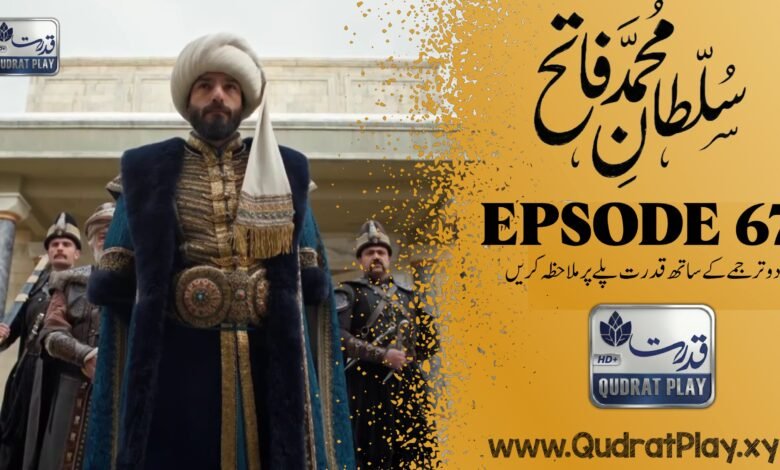
This episode of Sultan Muhammad Fateh (Mehmet the Conqueror) focuses on political intrigue, the suppression of internal rebellion, and the escalation of conflict in the Balkans. The narrative shifts between the Ottoman court, the Janissary barracks, and the volatile situation in Bosnia and Wallachia.
The Meeting in the Palace
Princess Rose is brought to the Ottoman palace after the devastating attack on the Bogomil village. Her presence in the Harem causes a stir among the residents, as Sultan Mehmet personally orders that she be hosted as a guest for a period of time. This decision reflects the Sultan’s strategic approach to the Bosnian situation; rather than treating her as a prisoner, he provides her with safety within his own walls.
The Contrast in Character
During their conversation, Princess Rose observes that the Sultan’s reputation in Europe does not match the man she sees before her. She notes that in European courts, he is spoken of as a “fearful and great falcon”. However, after meeting him, she admits that she now sees him differently, suggesting that his presence is more nuanced than the simple image of a conqueror portrayed by his enemies.
Philosophical and Strategic Tensions
The dialogue between them is layered with philosophical observations about life and power. The Sultan speaks to her about the nature of loneliness, stating that “loneliness only remains until you find your equal”. He offers his palace and lands as a way for her to forget her isolation, framing the Ottoman state as a source of protection and warmth.
Princess Rose’s Concerns
Despite the hospitality, Princess Rose remains wary of the Sultan’s ultimate goals. She explicitly questions his intentions regarding her homeland, asking whether he intends to bring her along as he moves to conquer or manage Bosnia. Her dialogue indicates a woman who has been hardened by life, remarking that “life has taught us to take care of ourselves”. This exchange underscores the tension between the Sultan’s imperial ambitions and the personal stakes of the displaced Bosnian royalty.
A central theme of this episode is the unrest among the Janissaries, the elite infantry of the Ottoman Empire. The story begins with a tense confrontation where the Janissaries express their dissatisfaction, shouting, “We do not accept!” during a royal banquet. Sultan Mehmet views this as a direct affront to his authority, questioning when the Janissaries began voicing their issues through such blatant defiance. To restore order, the Sultan tasks Huseyin Agha and Dogan with integrating back into the Ocak (barracks) to ensure loyalty and prevent further “games” or “enmities” within the ranks. The Sultan emphasizes a strict hierarchy: the Janissaries must obey their Agha, the Agha must obey the commander, and the commander must obey the Sultan.
Reflections on Loyalty and Betrayal
Sultan Mehmet expresses his deep-seated anxieties regarding the recurring themes of “fitna” (discord), “treachery,” and “rebellion” that he has witnessed within his ranks. He notes that while the Ottomans have always fought bravely and avoided seeking friends among the “infidels,” he is troubled by the lack of internal cohesion. The Sultan tells Ali Kuscu that he has “fears about the future,” emphasizing that the land and the state belong to those who can protect them, yet he senses a lack of courage in some to protect both the soil and the state’s integrity.
Ali Kuscu’s Perspective
In response to the Sultan’s heavy reflections, Ali Kuscu provides a spiritual and steadying counterpoint. The conversation underscores a shared commitment to the idea that true strength comes from unity and divine support, summarized by the phrase, “Allah is enough! The rest is just desire”. This exchange serves to highlight the Sultan’s isolation as a leader who, despite his external victories, must constantly guard against the erosion of order from within his own administration and military.
Strategic Context
The dialogue also serves a practical purpose as it transitions into the Sultan’s military preparations. Following these reflections, the Sultan continues his work on a “celestial map” and a “war calendar” with the help of Ali Kuscu’s scientific expertise. This highlights the unique relationship between the two, where Ali Kuscu acts as both a moral advisor and a scientific consultant for the Sultan’s upcoming campaigns against European coalitions.
Alliances and Betrayal in the Balkans
The episode details the complex maneuvering of Vlad Dracula, who seeks to prove his loyalty to the Pope and the Bosnian royalty. To clear his name of suspicion regarding an assassination plot, Vlad produces a witness, Haris, who testifies that the real threat came from an Ottoman agent. This testimony secures Vlad’s position within the Christian alliance against Sultan Mehmet. The Pope and the Bosnian Queen seal an alliance “with blood,” specifically targeting the Bogomils, a religious group seen as a common enemy. Vlad justifies the coming violence with religious rhetoric, stating he has come not to bring peace but the “rule of the sword”.
The Tragedy of the Bogomils
The plot follows through on the alliance’s threat as a brutal attack is launched against a Bogomil village. Despite the defensive efforts of Princess Rose and her followers, they are overwhelmed by superior numbers. The attackers show no mercy, with orders given to “finish them all” and leave no one alive. Vlad and his allies take satisfaction in the “cries of death” from the Bogomils, viewing it as a fulfillment of their interests and a blow against the Ottoman influence. Princess Rose is forced to flee the village to save the remaining survivors as the community is devastated.
Strategic Planning and Harim Updates
On the Ottoman side, Sultan Mehmet is not idle. He consults with the scholar Khoja Ali Qushji, requesting a celestial map and a “war calendar” to prepare for an upcoming great campaign against the “infidels”. Meanwhile, within the palace, This news brings a brief moment of joy amidst the heavy military and political preparations for the expansion of the empire int.
In episode 67 of the series, the interaction between Rado (the brother of Vlad Dracula) and Queen Katrina (the Queen Mother of Bosnia) centers on political alliances and the strategic use of land as collateral for war debts.
The Political Alliance
Queen Katrina leads the diplomatic efforts to form a coalition against Sultan Mehmet. In a critical scene, she meets with Rado and King Stephen to finalize the logistics of the Hungarian army’s arrival. Rado, representing the interests of Wallachia (Aflaq) and its connection to the Hungarian forces, is part of the inner circle planning the defense against the Ottoman expansion.
The Strategy of Collateral
A major point of their conversation involves the financing of the war. Queen Katrina points out that while they have an alliance and a military force, they lack the “gold” necessary to sustain a large-scale conflict. She suggests approaching Jewish merchants in Ragusa for a loan. When King Stephen worries about what guarantee they can offer, Queen Katrina proposes something radical: using the lands of their ally, Vlad Dracula (Wallachia), as collateral. Rado is shocked by this suggestion, questioning if she has “gone mad” for suggesting the use of his brother’s territories to secure the debt.
Tensions and Family Ties
The dialogue highlights the fragile nature of the Balkan alliances. While Rado is an ally, Katrina’s willingness to gamble with Wallachian land shows her cold pragmatism as the “Mother of Bosnia”. This exchange emphasizes that for Katrina, the survival of her kingdom and the defeat of Mehmet take precedence over the personal interests or territories of her fellow Christian allies.
