Gazali’s Existential Crisis
Gazali in a state of deep confusion, questioning whether he is in a dream or a different realm. He feels a sense of detachment, stating that while everything seems to be looking at him, he sees nothing. This reflects a state of spiritual blindness despite his vast intellectual knowledge. A mysterious figure, identified as his “forgotten shadow,” confronts him, suggesting that his obsession with “ilim” (knowledge) has actually made him blind. This figure explains that Gazali did not reach this place through his own will but through a “falling” that is more faithful than birth.
The Limits of Intellect and Pride
The mysterious guide challenges Gazali’s intellectual pride, noting that every answer he once gave was a “badge of pride”. He is asked a piercing question: “When did you last hear your own heart?”. To find true sight and knowledge, Gazali is told he must be silent to see, “die” to know, and escape from his own mind. The text emphasizes that knowledge which does not reach the heart is merely darkness. Gazali realizes that he has been running away from himself even while believing he was walking toward the truth.
Themes of Sacrifice and Sincerity
Parallel to Gazali’s internal struggle, other characters discuss the weight of “seeing” and the importance of self-reflection. Zeynep Hatun and Seyidi Hatun discuss the act of saving a life and the heavy burden of witnessing truth. Meanwhile, the Sheikh teaches Ahmet about the nature of “emanet” (trust/commitment) through the metaphor of a rose. He explains that a rose (representing one’s intentions or love) does not survive just by being planted; it requires water, attention, and breath. When Ahmet forgets to care for the rose he gave, the Sheikh points out that it is not just the flower that has withered, but the very “niyet” (intention) behind it.
Spiritual Surrender
Ultimately, the narrative suggests that human effort and “ilm” are insufficient without divine will and heart-centered sincerity. The Sheikh reminds his followers that while people may think they are showing the way, it is Allah who “writes the one who walks”. For Gazali to return from his state of being “lost,” he must accept his lostness rather than what he thinks he has found. The journey concludes with a call to awaken from the “sleep” of the ego and to realize that true reality is often found where nothing seems real to the physical senses.
 FOLLOW ON WHATSAPP
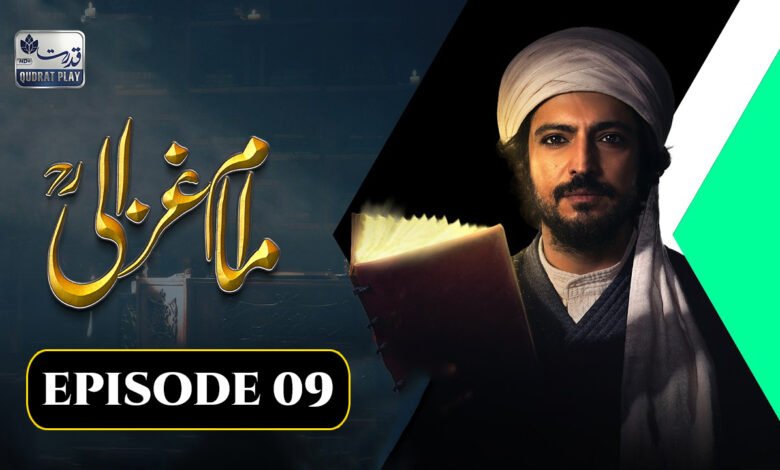
Imam Ghazali Season 01 Episode 09 With Urdu Subtitles – Qudrat Play